Introduction
Whole life Vs Term life insurance are two important life insurance policies, according to experts.
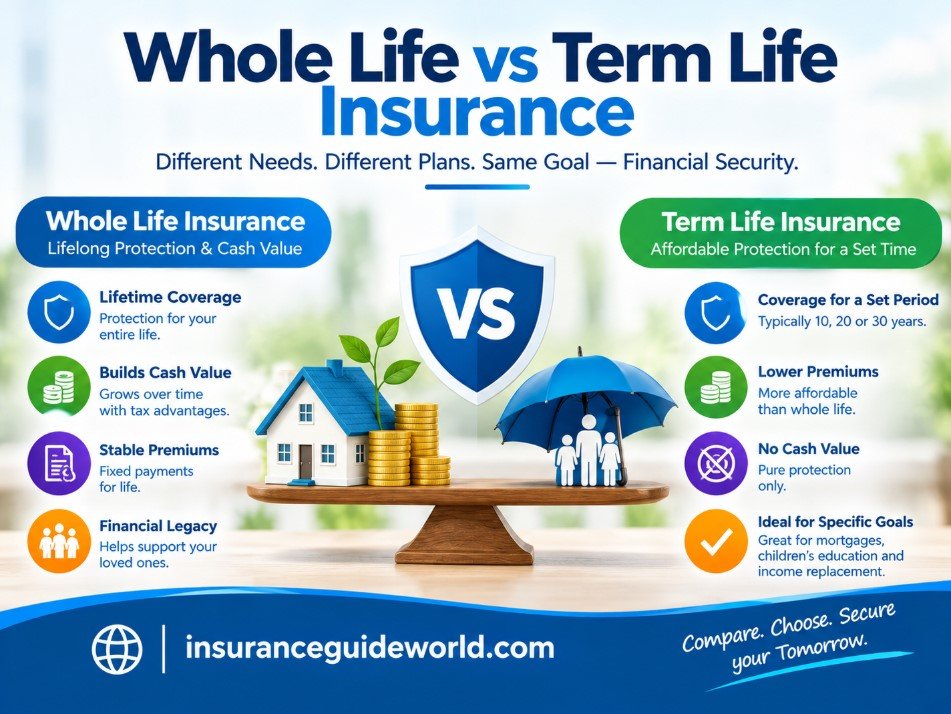
In simple terms, just for understanding, term life insurance is for a specific period (like 10, 20, or 30 years) with low, affordable premiums . As compared to whole life insurance, which is for your entire life and includes a savings component; because of this, premiums are higher.

Term Life vs. Whole Life Insurance: Which product is better for whom
Coverage Term: Term life covers a fixed time (for example, 10, 20, or 30 years). If you die during that period, your beneficiaries get the death benefit
A policy expires if it does not exist, but there is whole life insurance coverage for whole life, and term life insurance policies cost only a fraction as compared with a whole life policy.
Another benefit of whole life is that it builds cash value, but term insurance only pays out if you die during the term. Premium is fixed for the whole life as compared to term insurance.
Term life insurance is better for a limited period on a protected budget.
aflac.com
What Is Whole Life Insurance?
Whole life insurance covers the entire lifetime period as the insurer pays the premium investment. As the years pass, your policy’s cash value increases from a small unit.
Definition
In summary, a way to understand that a whole life is given one plan rolled into one protection plan and a savings plan.
Main Features
Whole life insurance has several distinctive features:
Policy never expires as long as you pay the premium.
Premiums value not change with age or health changes
Dividend benefits are also applicable as per policy.
Pros
Whole Life Protection: You get guaranteed coverage for your whole life.
Continued savings: The cash-value component increases as the time passes.
Limited premiums: Your payments constant every year; they do not depend on older or developed health issues
Benefit for Family: Your family will receive a payout, which can help with final expenses, debts, and the family’s future.
Cons
High premiums: Premium higher than term for the same coverage amount.
In short, whole life is better, but those come at a cost. If someone can afford the premiums and wants forced savings on top of insurance, it can be a good tool for him.

Conclusion
In whole life insurance we pay premiums only for a fixed period for covered life, which has cash value. Term life insurance is cheaper and straight forward and has no cash value. Whole life insurance is complicated as compared to term life insurance. Term life and whole life insurance provide financial security as per defined T&Cs, but both policies are for different needs. Term life is for temporary needs, and whole life insurance is for the whole life and builds cash value, but we pay a higher premium. Choose a policy as per your budget, purpose, and best support for your family’s financial future.
FAQ
Q: What is the downside of whole life insurance?
A: Whole life insurance usually has higher premiums than term life insurance and may provide lower investment returns.
Q: How much a month is a $500,000 whole life insurance policy?
A: A $500,000 whole life policy can cost hundreds to over $1,000 per month, depending on age, health, and policy features.
Q: Does Dave Ramsey recommend whole or term life insurance?
A: Dave Ramsey recommends term life insurance rather than whole life insurance.
Q: What does Warren Buffett say about whole life insurance?
A: Warren Buffett has criticized high-cost insurance products and generally favors keeping insurance and investments separate.
Q: How much does a $100,000 whole life insurance policy cost per month?
A: A $100,000 whole life policy may cost about $50–$300+ per month, depending on age, health, and policy terms.