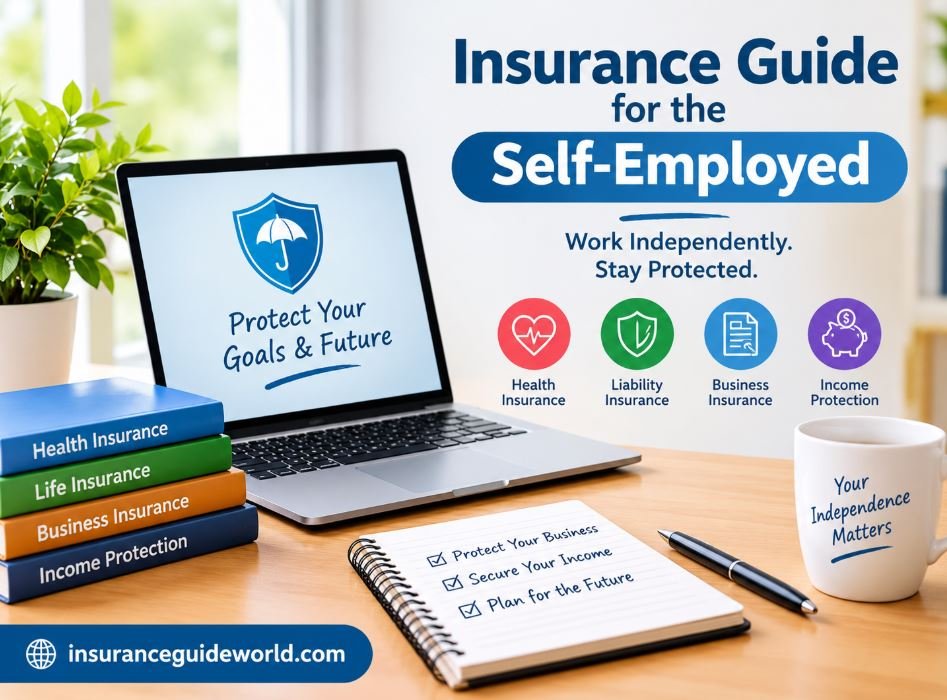
Insurance guide for self-employed. Being your own boss is liberating—but also a responsibility. Independent workers don’t get company benefits like health insurance or paid time off, the way traditional employees do. This is exactly the reason why self-employed insurance is important to keep your income, health, and business safe from unexpected economic blows.

1-Health Insurance Guide for the Self-Employed
The first thing you should get is health insurance. Without it, one medical emergency could wipe you out.
Ways to get coverage:
• Purchase plans through Healthcare.gov under the ACA.
• Purchase direct insurance from private carriers such as Cigna, Aetna, or Blue Cross.
• Opt for HSA-eligible plans and save yourself some taxes.
• If you need short-term coverage, check out short-term plans.
💡 Tip: You could be eligible for tax credits based on your yearly income.
2. Liability Insurance Guide for the Self-Employed
And if you interface with clients or customers, liability insurance shields you against potential suits, accidents, or damages.
Types include:
• General Liability: Protects from injury or property damages that occur on the job.
• Professional Liability (Errors & Omissions): Covers negligence or error claims.
• Product Liability: For those who sell products or goods.
3-Disability & Income Protection Insurance Guide for the Self-Employed
Your income is based on your ability to work.
Disability insurance provides income if you can’t work because of illness or injury.
Types:
• Short-Term Disability: This will cover you for weeks to months.
• Long-Term Disability: Offers income for months or even years.
4-Business Insurance Guide for the Self-Employed
Prevent theft, fire, and tampering with your workspace and equipment.
• Business Owner’s Policy (BOP): Includes property and liability insurance in one package.
• Commercial Auto Insurance: For work vehicles or delivery services.
• Cyber Liability Insurance: Important for any online business or digital company.
5-Life Insurance Guide for the Self-Employed
Life insurance financially safeguards your family in case something happens to you.
Options include:
• Term Life: Cheap life insurance, long enough to protect you for 10–30 years.
• Whole Life Insurance: Lifetime protection with cash value growth.

⚖️ Compare: Self-Employed vs. Traditional Employee Insurance
Feature Self-Employed Traditional Employee
Health Insurance purchased independently, provided by the employer
Premium Costs: You pay 100% shared with the employer. Disability coverage is optional and self-purchased. Often included
Business Liability Mandatory for client work N/A
Tax Savings: Yes, premiums can be deducted. R1060: no deduction
Pros and Cons of Self-Employed Insurance
Pros
🏥 Guards your health and wallet
⚖️ Airlifts against suits in court
💰 Tax-deductible premiums
💼 Sustain your business running effectively in the face of disruptions
🌐 Custom options to fit your earnings and job type
Cons
💸 Higher out-of-pocket costs
📋 Investment of time to research and administer plans
Claims or reimbursements might take longer
How to Select the Best Insurance Policy Guide for the Self-Employed
Consider your risks—health, business, and income protection.
Compare multiple providers before buying.
Bundled coverages (health + liability) for discounts.
Speak to an insurance specialist for bespoke cover options.
Take another look at policies annually as your income and business expand.
Real-World Example: Guide for the Self-Employed
Freelance graphic designer, working from home. Freelance Graphic Designer Working From Home
May need:
• Risk for personal and health medical insurance
• Client work—with professional insurance (in case it all goes wrong).
• Business property insurance to cover equipment
• Disability insurance for income protection
This combination guarantees complete coverage—personal and professional.

Conclusion
Running your own show means that you’re ultimately in charge of your financial safety net. From health insurance to business liability to income protection—each one is your long-term stability. You will pay a little more on the front end, but peace of mind and safety are priceless. Begin by finding out what your biggest risks are and gradually adding to your insurance portfolio.
FAQs
What is the best insurance for self-employed workers?
Begin by factoring in health and liability insurance, then include disability and life coverage for total protection.
Are insurance premiums tax-deductible?
Yes. Self-employed people can usually deduct health, life, and business insurance premiums.
How much is self-employed insurance?
The amount: Expect to pay about $350–$600 a month (which will vary depending on your plan and the state).
Do freelancers need liability insurance?
Yes—especially if you offer services or advice to clients.
Where do I go to buy self-employed insurance?
Visit HealthCare.gov, or reach out to private insurers.